Exploring Indonesian Art History: The Bandung School
Published at Dec 12th 2025 3:20am
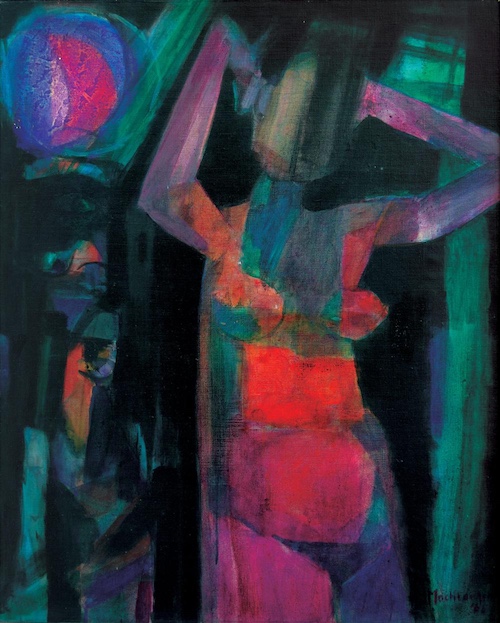
Mochtar Apin - Women Under the Moon (1968)
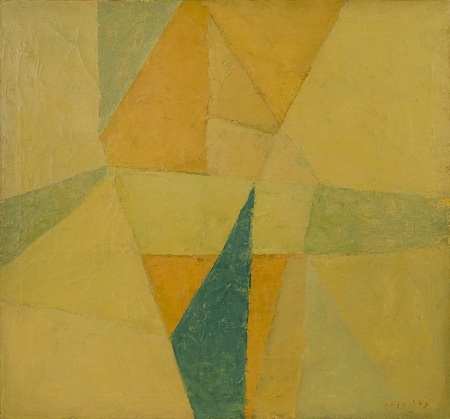
Popo Iskandar - Yellow Flower (1967)
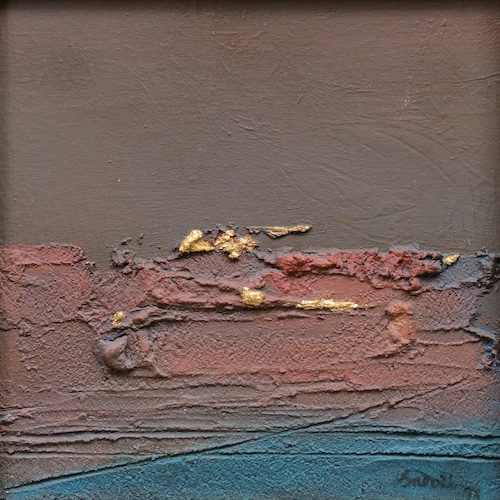
Ahmad Sadali - Horizon (1976)
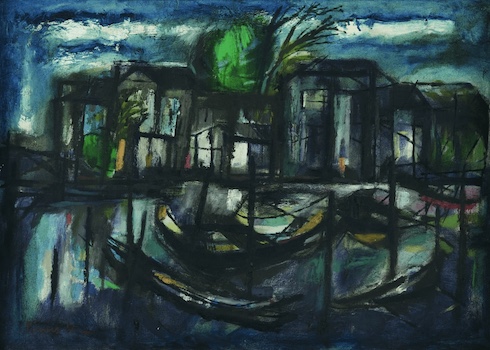
Abdul Djalil Pirous - Rumah di Tepi Sungai (1965)
I remember the first time I was exposed to the works of the early abstractionists who emerged in Bandung following the end of the Second World War. I had just joined the auction house, and my exposure to Indonesian art had been lacking, to say the least. We were in the middle of preparing for one of our monthly auctions, and the walls of our modest gallery space were being used as makeshift storage. Luckily for me, this meant great art, handpicked from across Indonesia’s history, was lined up frame to frame, just waiting for me to look at.
I took my time combing through the amazing realist work our country’s modernists are known for, but organized into a corner were the outcasts, the products of the “Bandung School,” a different stream of modern art in post-revolutionary Indonesia. These paintings were rough, aggressively textured color blocks, earthy and raw in a way that demanded my attention, as if calling me back again and again. I had never seen anything quite like it. It lacked the elegance of the Western abstraction I was familiar with, as if it had come from an entirely different strain and was speaking to an entirely different audience.
The Bandung School is a term used to refer to the art school in what is now Institut Teknologi Bandung (ITB). Artists like Mochtar Apin, Ahmad Sadali, Srihadi Sudarsono, Popo Iskandar, and many others served as a foundation of this movement, first as students and later as lecturers and exhibiting artists. Their approach often clashed with the nationalist critics of the 1950s, who claimed the work lacked an Indonesian soul and appealed to an elitist, and more importantly foreign tendency. But contrary to the criticism, the Bandung School brought out a movement that was uniquely Indonesian as it built upon the foundation laid by Dutch artist and lecturer Ries Mulder. Sadali’s textured abstractions drew on Islamic meditative traditions, while Pirous reinterpreted Arabic calligraphy through a modernist lens. Iskandar, meanwhile, distilled his subjects into vibrant expressive forms that drew focus to the mundane.
What struck me most as I learned more about the Bandung School was how deliberately different it was. Other centers of Indonesian art like Yogyakarta chased narrative, emotion, or nationalist symbolism, while Bandung pursued disciplined practice and conceptual clarity. The influence of Ries Mulder and the early ITB curriculum shaped a generation that thought of painting less as a vessel for ideology and more as a way of organizing form, material, and thought. Their abstractions were neither political nor apolitical, neither overtly religious nor secular, neither nationalist nor colonialist; they grew from the belief that art did not need to be weighed down by its immediate environment, even as it remained open to drawing from the place and purpose of its own origins.
- Javed Widarso